Now is Not the Time
said Calvin

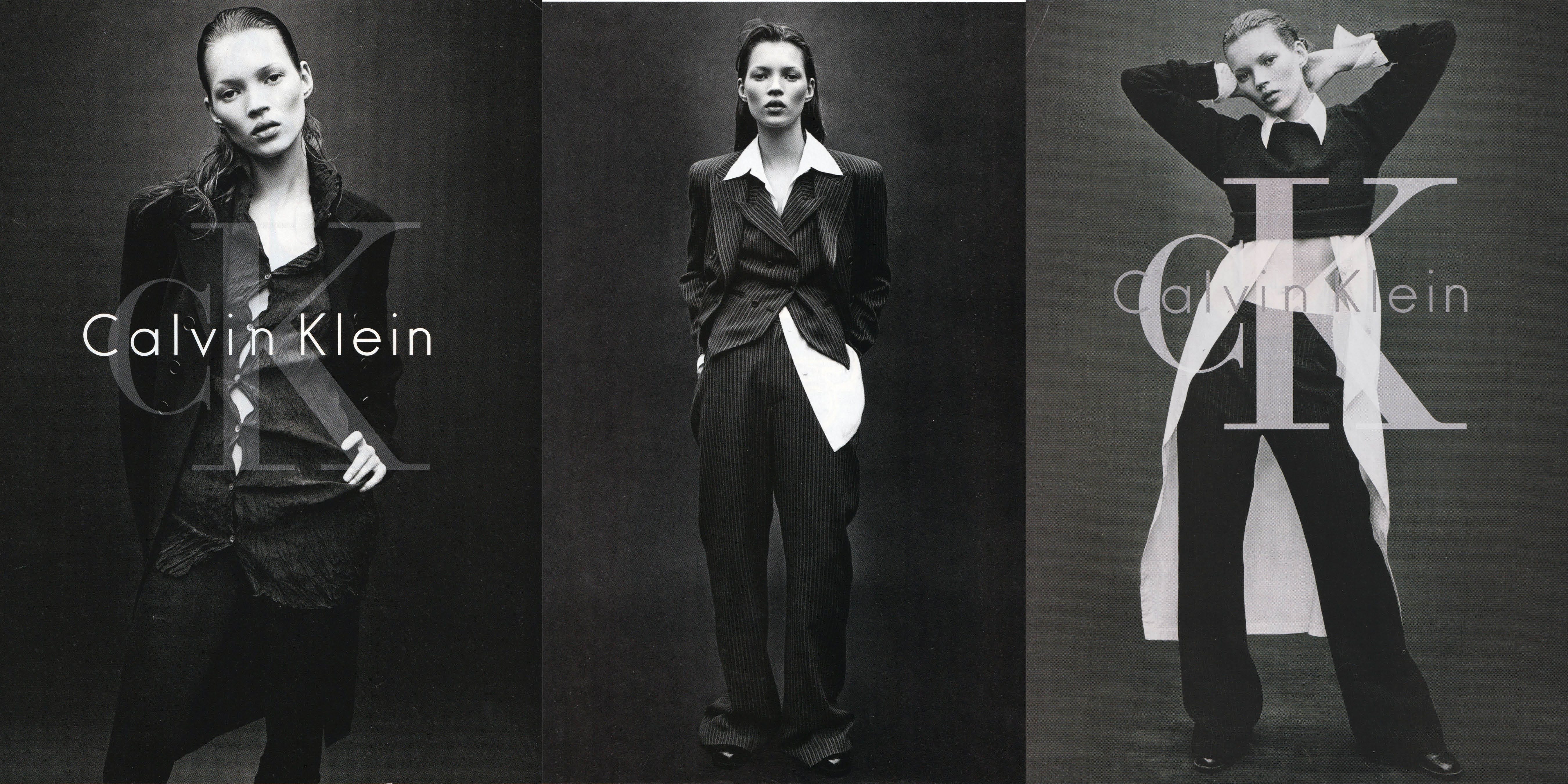
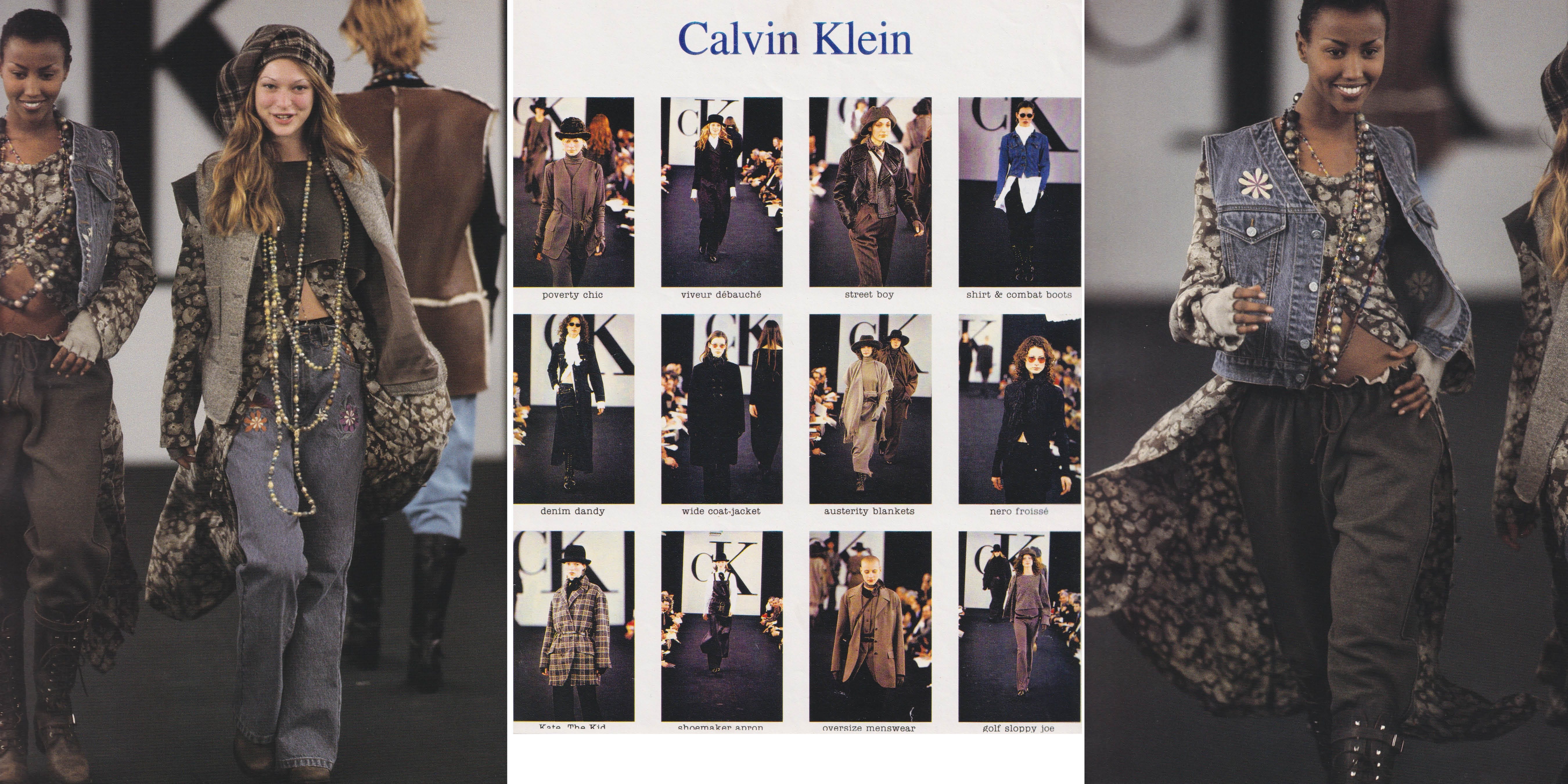
Expectations for our second CK show ran high, not least because Marc Jacobs had shaken the New York fashion scene by introducing Grunge, a look far removed from our modern, stylish, carefree CK launch six months earlier. What would the new team at Calvin do, our critical audience wondered. The collection that follows a successful one is always a hard one, as the hyenas circle. But Calvin agreed that we should stay on brand and only style the jeans collection with a nod to heroin chic, but “nothing too gloomy.”
Half an hour before the show started, we were one model down. I had walked in the London designer shows more than a decade earlier, and someone suggested I should fill in. It had taken me years to get away from the image of (stupid) model and be seen as a real designer. No way was I going to save the show by compromising myself. I suggested that Carolyn was by far the most beautiful woman at Calvin Klein, and the superior choice. Danny went to find her, and I went through the rack of looks, to see if we could make it happen. Luckily, just then, Shalom came breezing in, apologetic, she’d been in Isaac’s show, and it ran late.
Carolyn and I had bonded in our dread and subsequent relief of ending up on the catwalk, and laughed that I’d tried to dump the mission on her. Shortly after the show was over, she came to me with Anne, a fashion editor from London whom I knew well from both my modeling days and later, when she reviewed my collections at the London Fashion Week shows.
“So, you’re here,” Anne said, thrilled, “I wondered who was behind all this.”
Before I really knew what was happening, Carolyn had maneuvered Anne and Roy, her photographer, into my office. She’d cleared my desk, helped Roy with his lights, and Anne was asking me questions for the article she was going to write on the “London-bred designer behind CK’s success.”
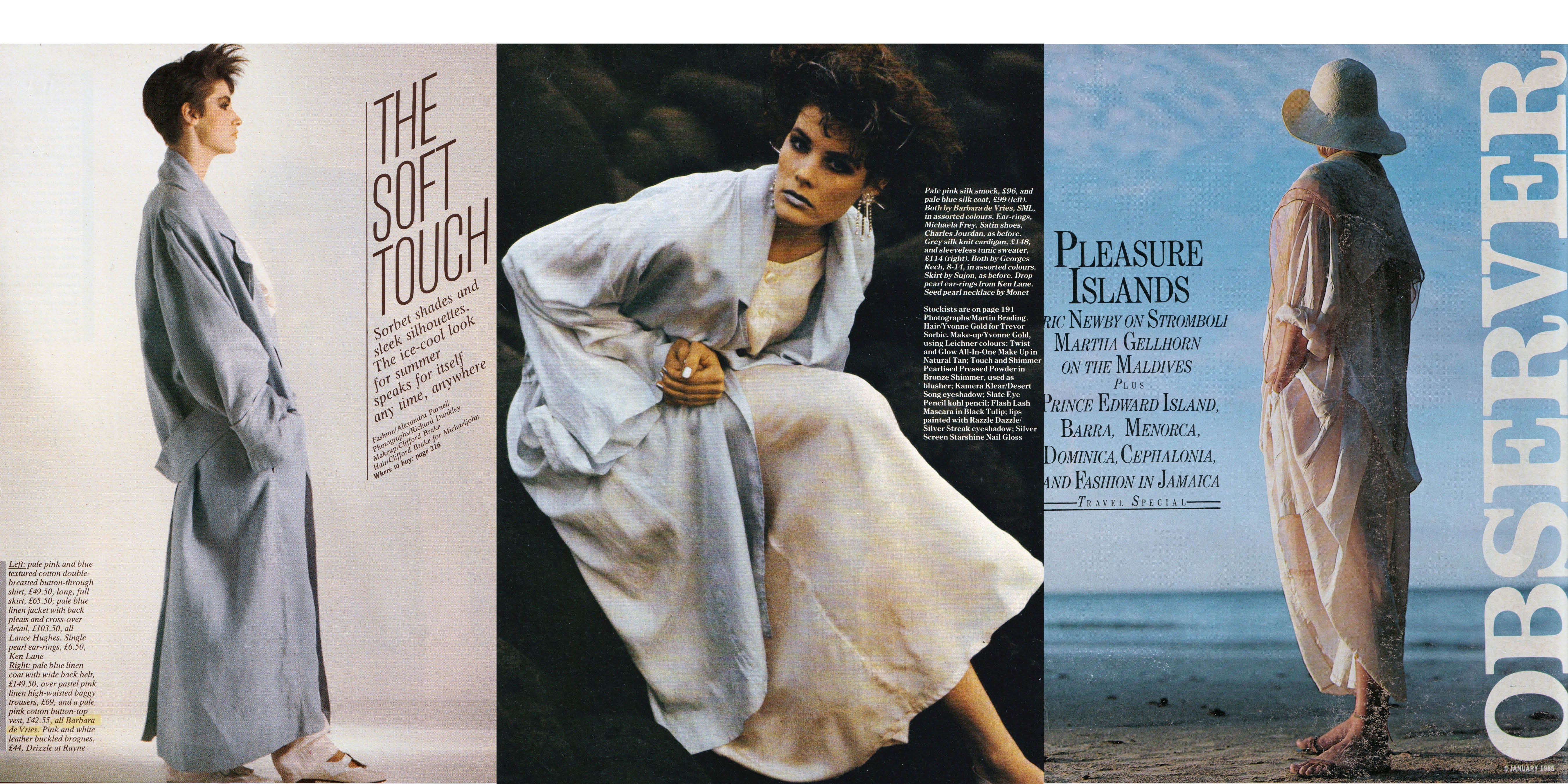
I felt uneasy, as if I was doing something illegal, overstepping onto forbidden ground. But Carolyn’s authentic rebellion and Anne’s enthusiasm were contagious and I went along, until the door flung open and there stood Paul Wilmot. Carolyn beamed at her boss, like what we’re doing here is really cool, but I knew better.
“I’m afraid we got to shut this down,” Paul said, in his usual snooty way.
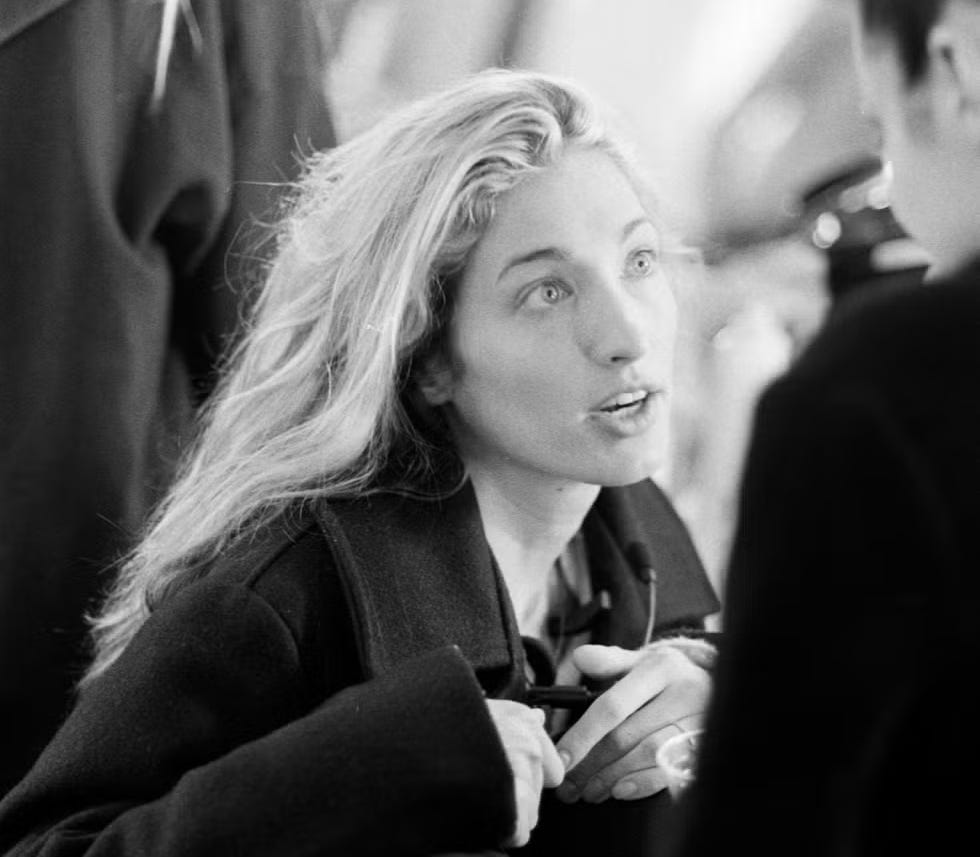
I remember feeling embarrassed, as if I’d lied to Anne and I wasn’t for real, unworthy of recognition. Carolyn seemed unperturbed, like whatever, it had been worth a shot. Anne was disappointed, she’d looked forward to delivering a bit of exclusive New York gossip to her British readers. I knew all along that Calvin wouldn’t allow it. We were just trying to get away with it.
Later, Calvin took me aside. He was sort of sympathetic. Understood that Paul’s missive had been an unwelcome interruption. “But now is not the time,” he said. “Maybe later, we can do something together.”
I knew later would never come. Even now, decades and several cultural/gender power shifts later, it’s still not how it works. You’ve got to write your own story, or others will write it for you, as the saying goes.
Unrelated but related:
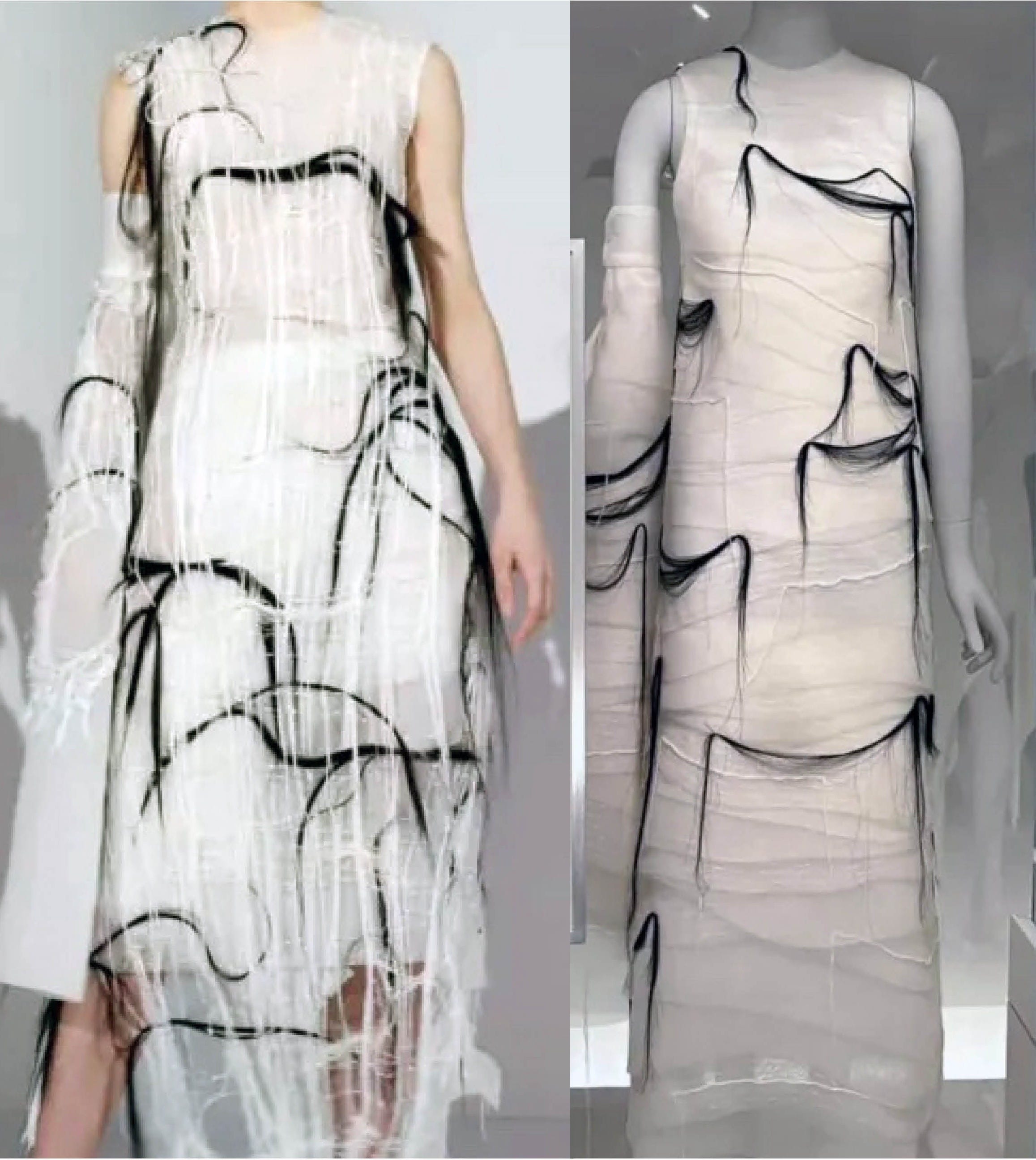
Just last week Anouska Samms, a London-based textile designer, spoke out against the Metropolitan Museum of Art, Costume Institute for exhibiting a dress that uses a fabric she developed with designer Yoav Hadari, for his 2023 collection. She and Hadari, friends who met at the Lee Alexander McQueen Sarabande Foundation, made a contract for their collaboration, which recognizes Samms as the sole owner of the copyright of the fabric design. The original dress was initially selected by Andrew Bolton OBE, curator, for inclusion in the Costume Art show, now on view at the Metropolitan Museum. For some reason this dress was cancelled only to be replaced by a very similar dress, made exclusively for Andrew Bolton OBE and the Costume Art show, using Samms fabric design, but crediting only Hadari. Samms found out about the replacement dress when she was tagged and congratulated in a post by a friend who was familiar with her work, and assumed it was the original dress.
Samms contacted the Met and pointed out she’s the designer of the fabric and copyright holder of the material used in the dress. The Met responded with a refusal to follow due diligence on provenance etcetera, despite receiving a copy of the agreement between Hadari and Samms.
Now, how easy and less embarrassing, would it be to issue a quiet apology and redo the credits. Problem solved. But no. Apparently this is another case of “it’s not how it works.”
The Met, Andrew Bolton OBE and Hadari have doubled down and once again two men and the institution that supports them take credit away from the work of a woman, just because they think (know) they will get away with it. They have since offered Samms $1200 to appease her, without adding credit but including a gag order, treating her like an irritating amateur, “quiet piggy” comes to mind, instead of a distinguished artist with an impressive career. And I wonder quietly, if Samms were a gay or even straight man with the same pedigree would the outcome have been the same?
For updates and to voice support follow Anouskasamms @ Instagram